
Another LEO SAT antenna upgrade
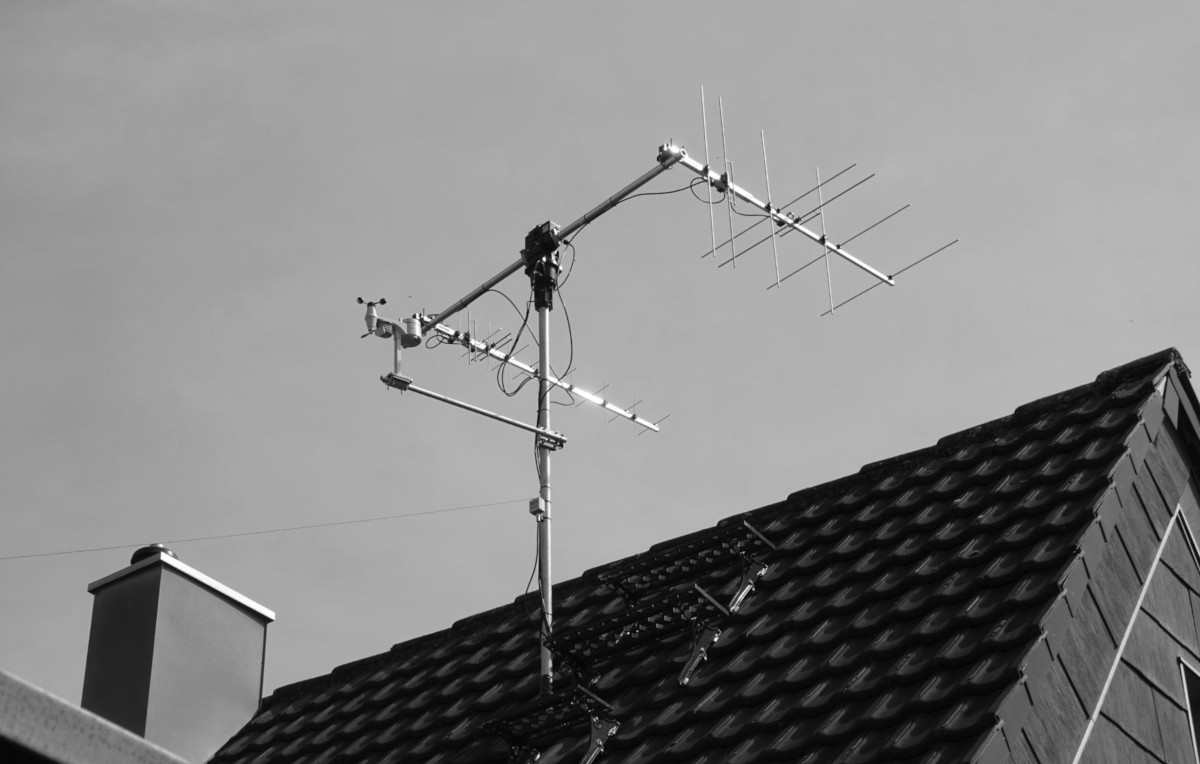
Posted on 2026-08-27Until now, I had mounted my 70cm and 2m Yagis on the wall of the house extension using a telescoping mast. This worked well enough, and the antenna system was easy to maintain since I could access the antennas directly from the flat roof of the house extension. However, the antennas were mounted too low to work low elevation passes. My own house was in the way, especially when pointing north but there are also other houses and some tall trees surrounding the property. Admittedly, the antennas weren’t exactly a pretty sight either. The only way I saw to change this situation was to mount the two cross-Yagis on the roof of the house. Unfortunately, I suffer from a fear of heights which I’ve managed to control quite well but I’m still unable to climb a gabled roof with a rotor or a 4-meter-long mast under my arms. So, together with a professional, I first had steps permanently installed on the roof. These extend from the gutter to the roof ridge. Next, we installed a 4m long 48mm steel mast in the attic and fed it through the roof. We then mounted the rotor and the Yagis on top of it.
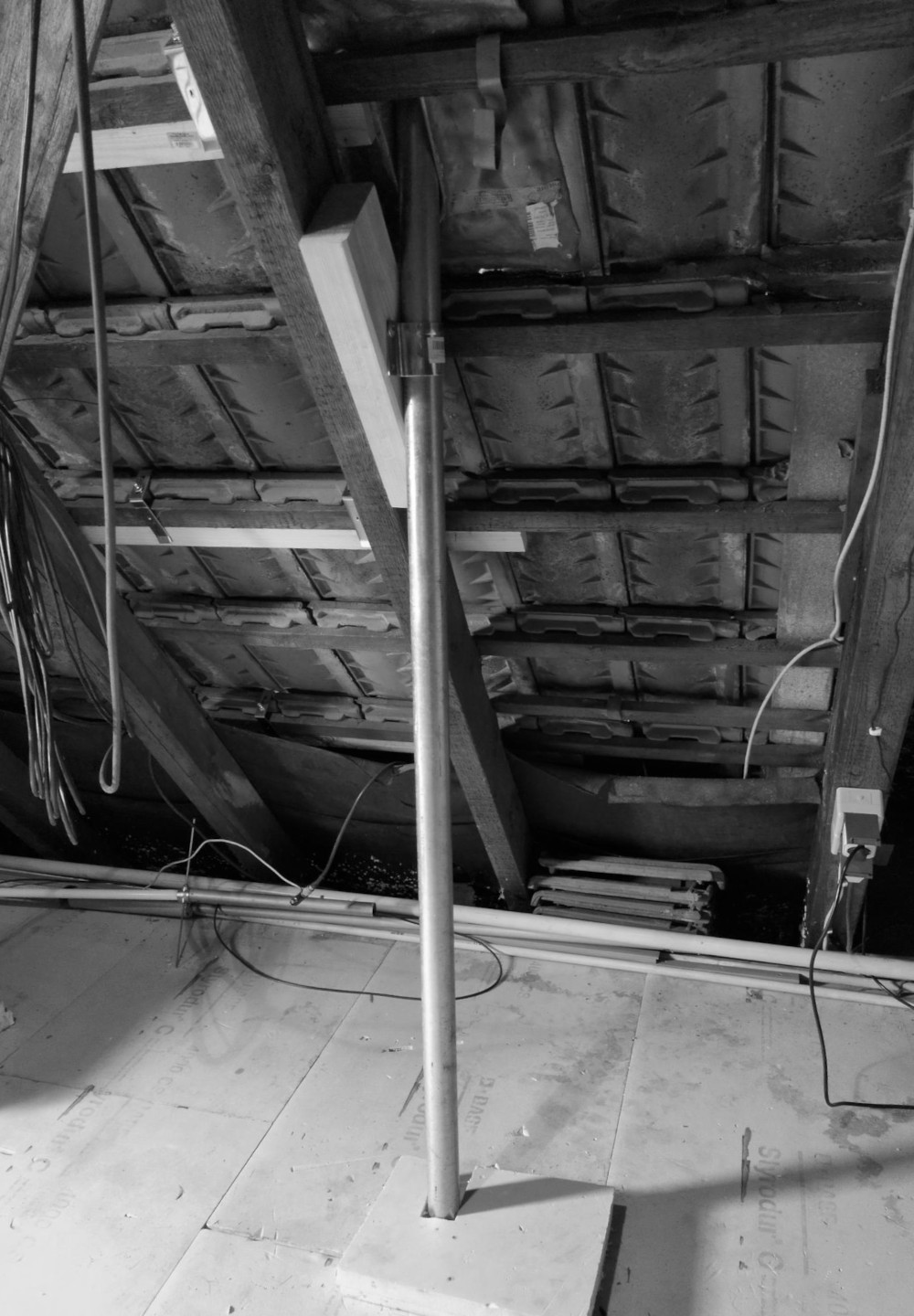
The mast was secured both to a wooden beam beneath the attic floor and to a rafter:
As you can see in first the picture above, this mast offers new advantages. Since I can climb up to the mast relatively easily using the new steps, I’ve installed both a weather station with a wind gauge, UV sensor, rain gauge, etc., and an Endfed antenna for 17m.
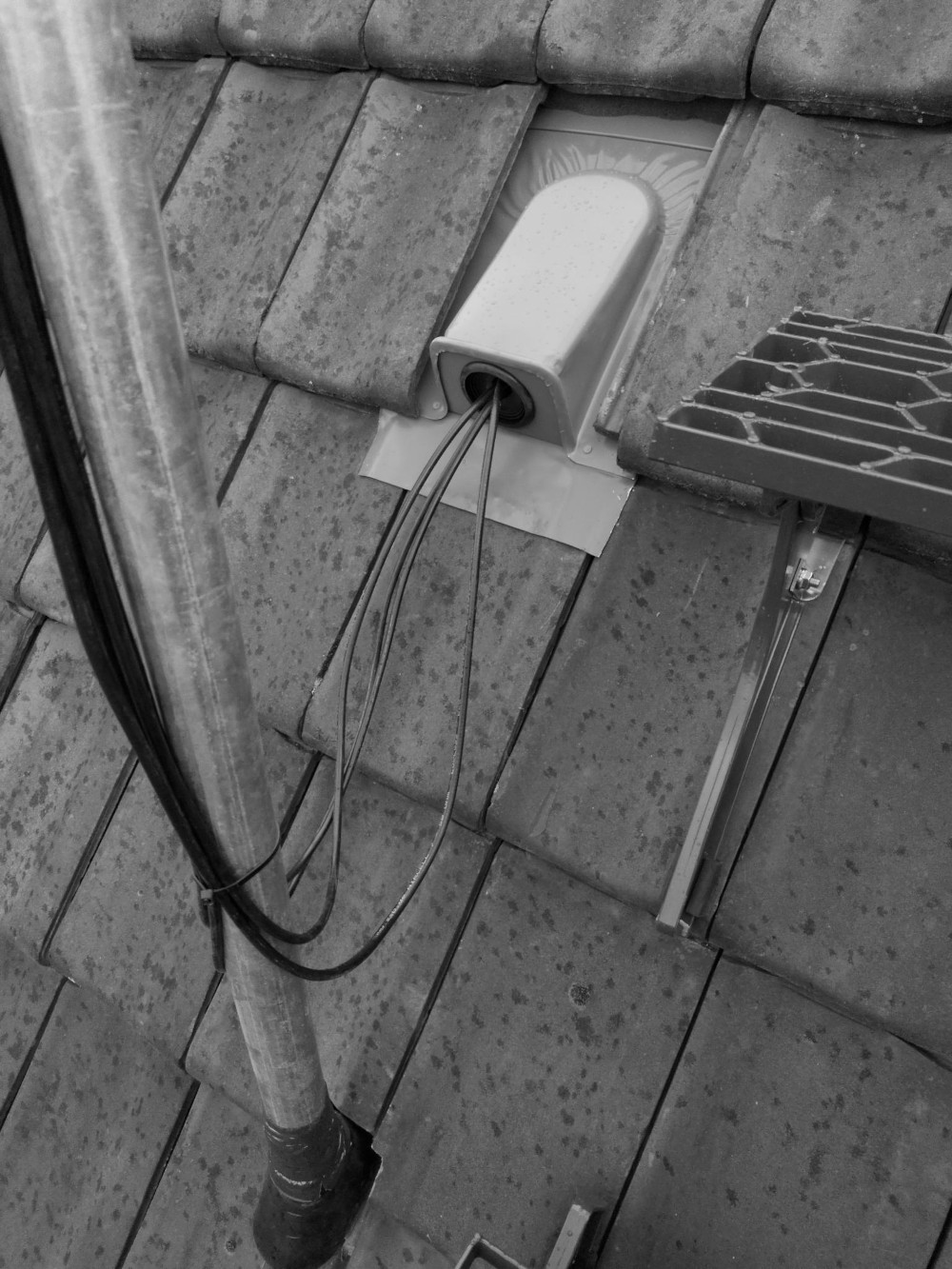
To route the cables into the attic, we installed a special roof tile designed so that cables can be easily pushed through a rubber membrane into the interior.
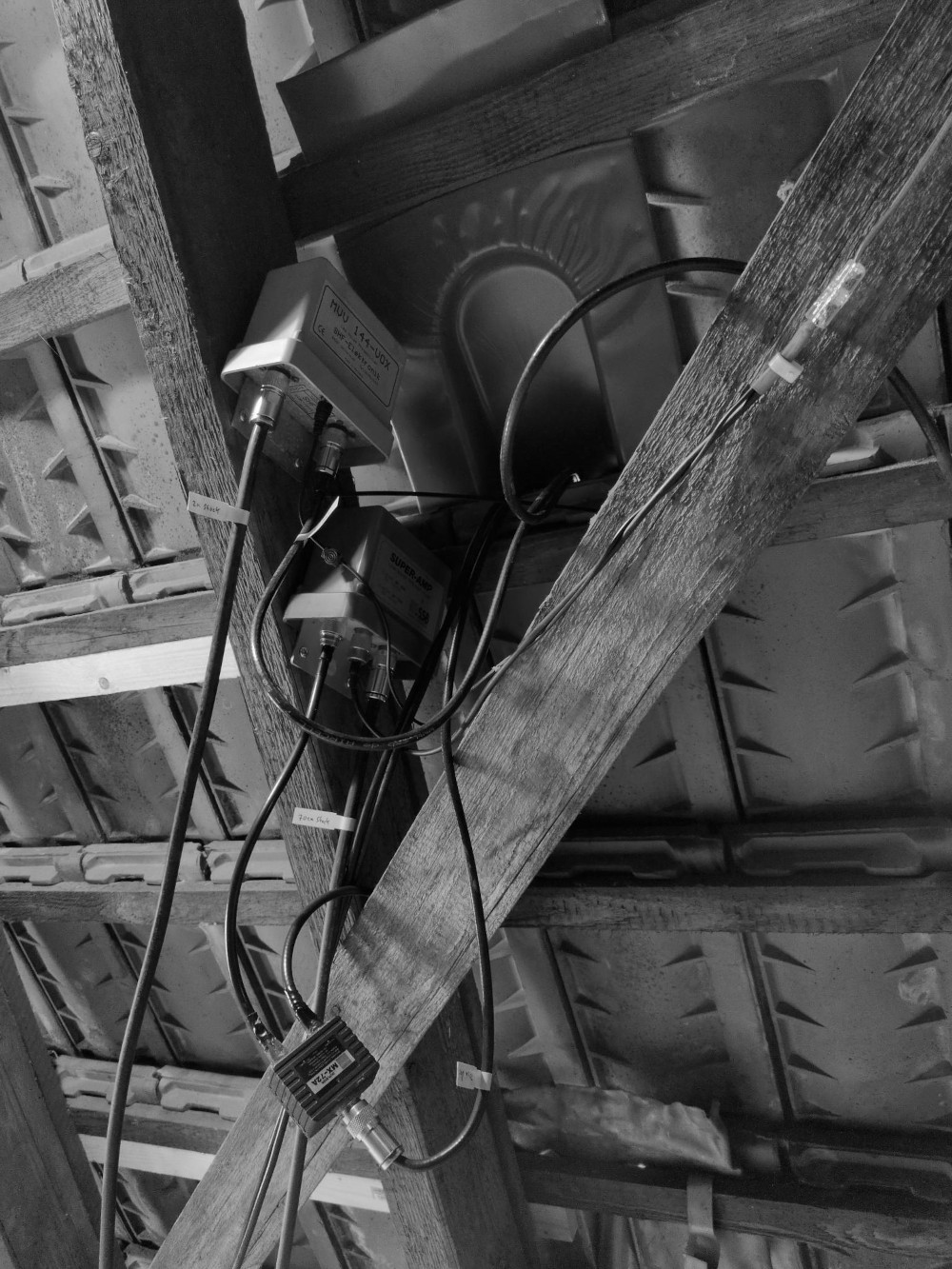
Even though this results in longer coaxial cable runs between the antennas and the pre-amps, I decided to mount the pre-amps under the roof. This allows me to make adjustments to them much more easily, and the number of coaxial connections exposed to wind and weather has been reduced to a minimum.
Unfortunately, the project was quite costly. The most expensive parts were the roof steps, and even a steel pipe costs a small fortune these days. From an aesthetic standpoint, though, it was worth it, and I was also able to shorten the coaxial cables from the shack to the antennas by about 8 meters each. The new ability to mount a weather station so high on the house and conduct wire antenna experiments also eases the financial strain. Whether I’ll now be able to work DX stations during extreme low elevation satellite passes remains to be seen in the near future.